n spring the Red Knot stands out on tidal flats in its bright chestnut plumage on its face, chest and belly. It has black legs and a black bill that is about as long as the head is wide (Paulson). By late July it will have molted to gray with a white belly and it easily blends in with other shorebirds and the colors of sand and vegetation along shorelines.
Pacific-slope Flycatcher
Rough-legged Hawk
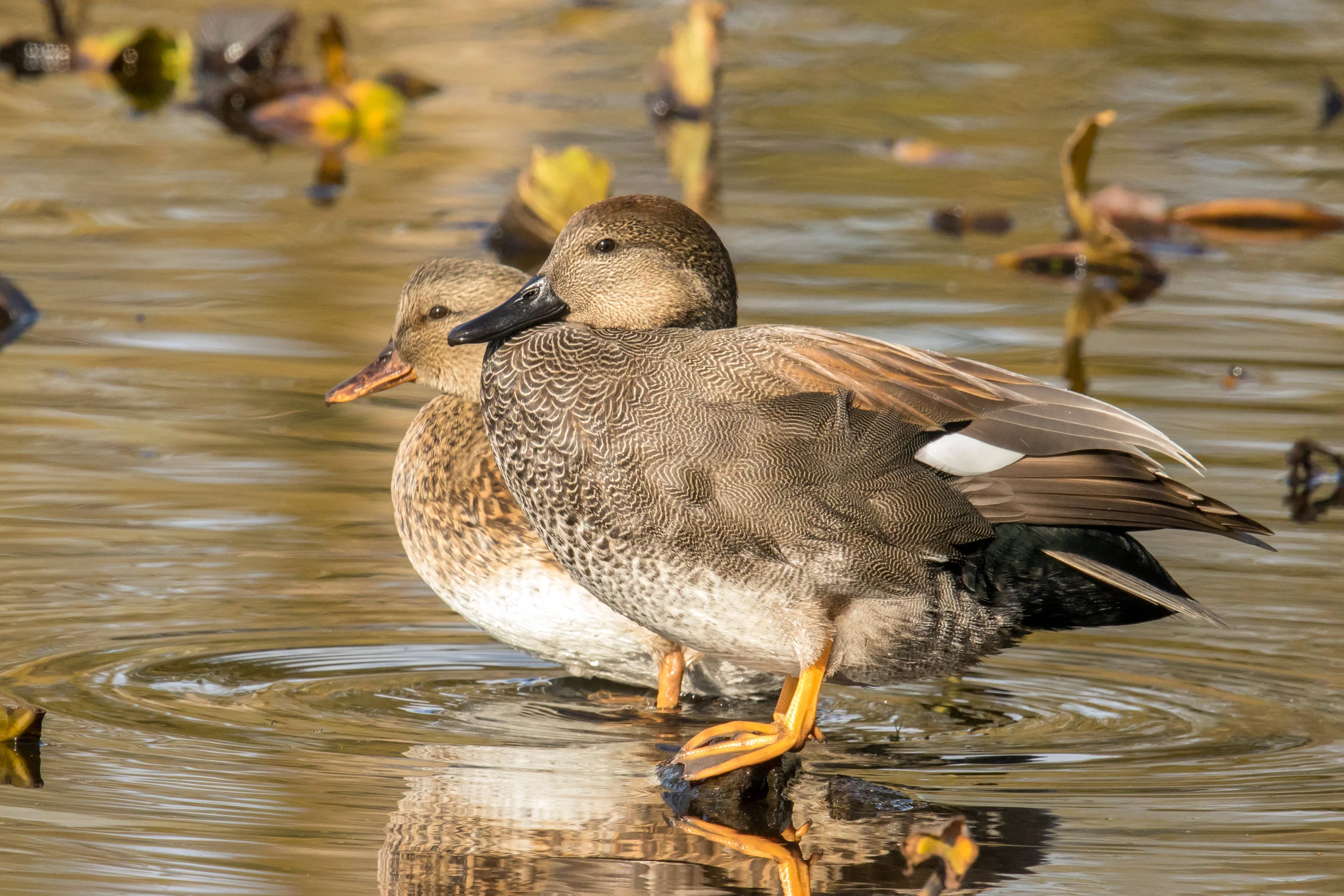
Gadwall
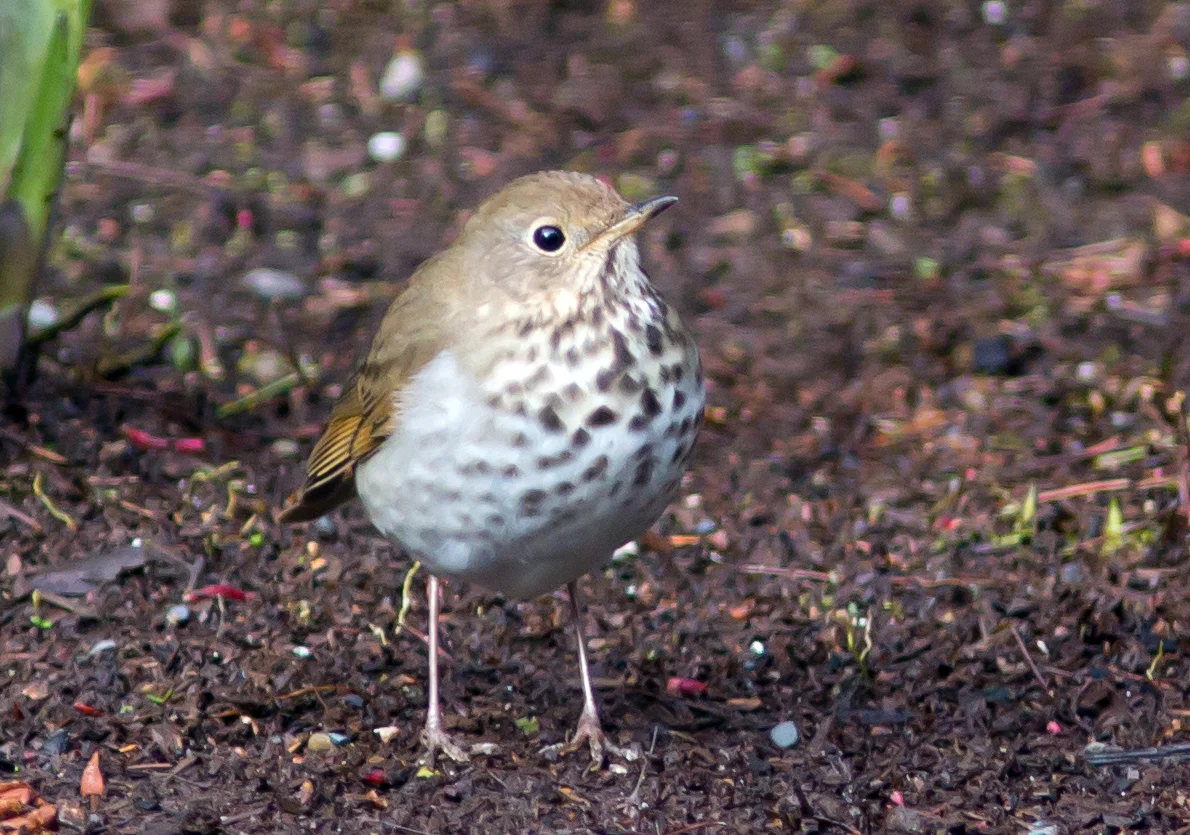
Hermit Thrush
Yellow-breasted Chat
Long-billled Curlew
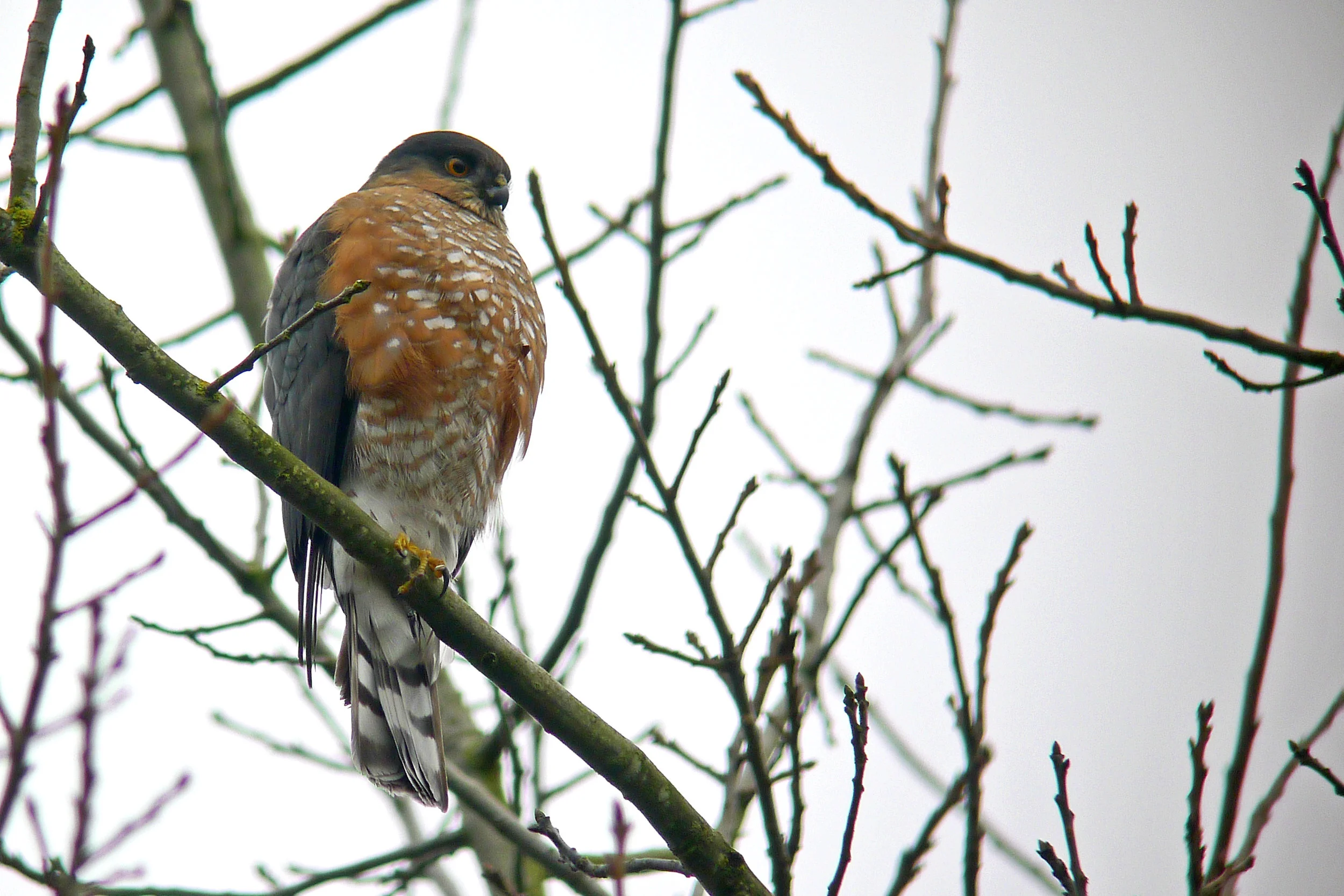
Sharp-shinned Hawk
American Kestrel
If you see a small, long-winged bird hovering over an open field, most of the time it will be an American Kestrel. This type of hunting pattern is used by only a few species of birds and it is a trademark for a kestrel, which hovers by facing into the wind, flapping its wings and spreading its tail.
Black Swift
Purple Finch
House Finch
Evening Grosbeak
Ruddy Duck
Swainson's Thrush
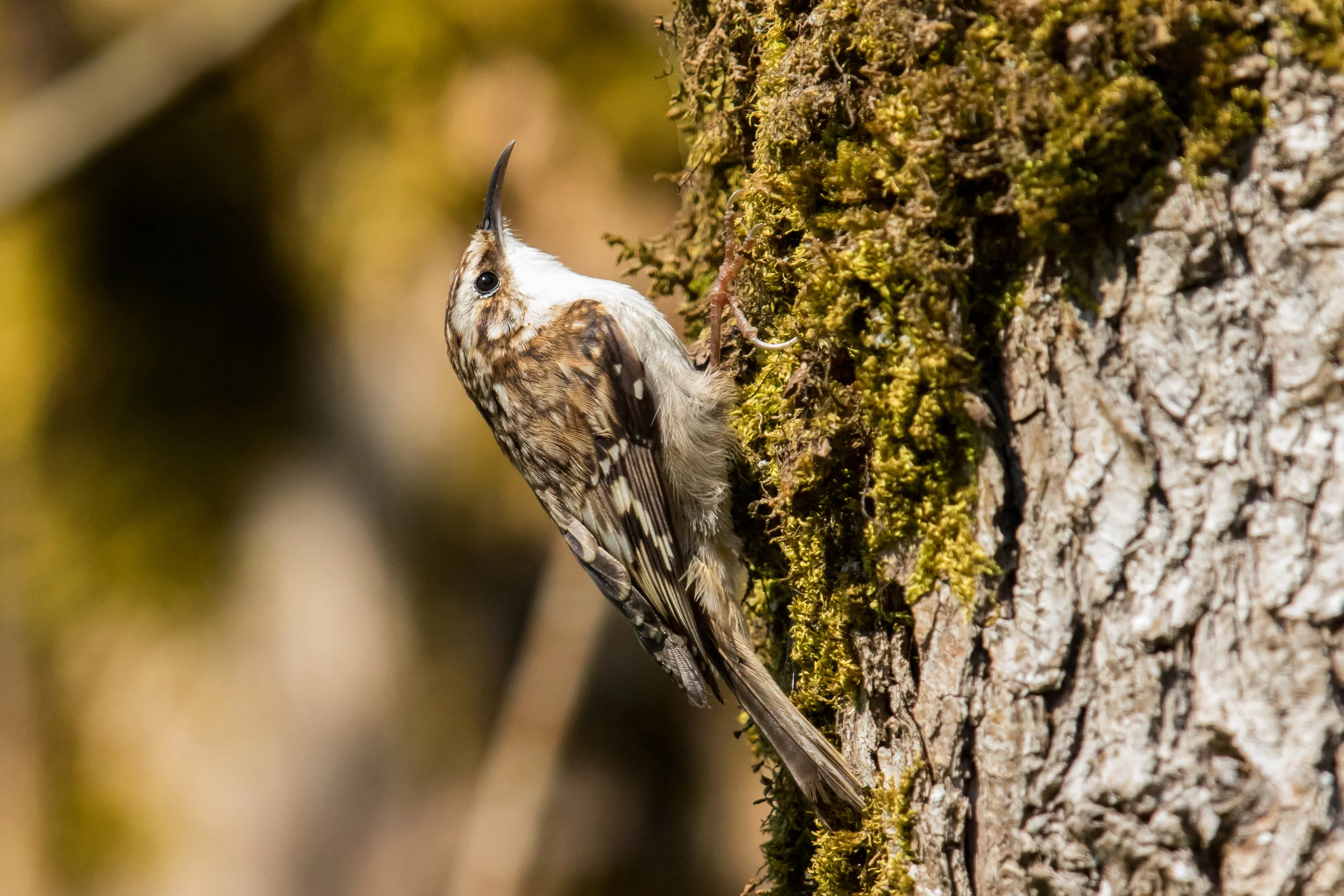
Brown Creeper
The Brown Creeper (BRCR) is about 5 - 5-1/2" long and is camouflaged with brown streaked plumage above and dull white below. It has a relatively long downcurved bill and long, pointed tail feathers. Creepers spiral upward from the base to the branches of a tree, then will fly to a lower place on another tree, probing bark for insects and larvae.