
2025-2026 Eastside Audubon Christmas Bird Count (CBC) Report
Andy McCormick, CBC Compiler
20 December 2025
National Audubon Count No. 126
Eastside Audubon Count No. 43
95 species tallied (count day + count week)
Count day: 91 species
Count week: 4 additional species
Individual birds: 19,029
Observers: 76 (71 in the field + 5 feeder watchers)
Overview
The 43rd Eastside Audubon CBC was held on Saturday, December 20, 2025. The weather was partly cloudy with temperatures ranging from 40 t0 45 degrees F. We had some light rain some rain but overall it was a good day for birding.
During the week immediately preceding our count western Washington was inundated by record floods along four of the major rivers, two of which the Snoqualmie and the Tolt Rivers, run through our count circle. Major portion of the Snoqualmie Valley were flooding causing roads to be closed and flood damage outside the normal banks of the rivers. It was only the day before the count that the roads opened to traffic. Farm fields remained flooded, and ponds, lakes, and rivers remained high.
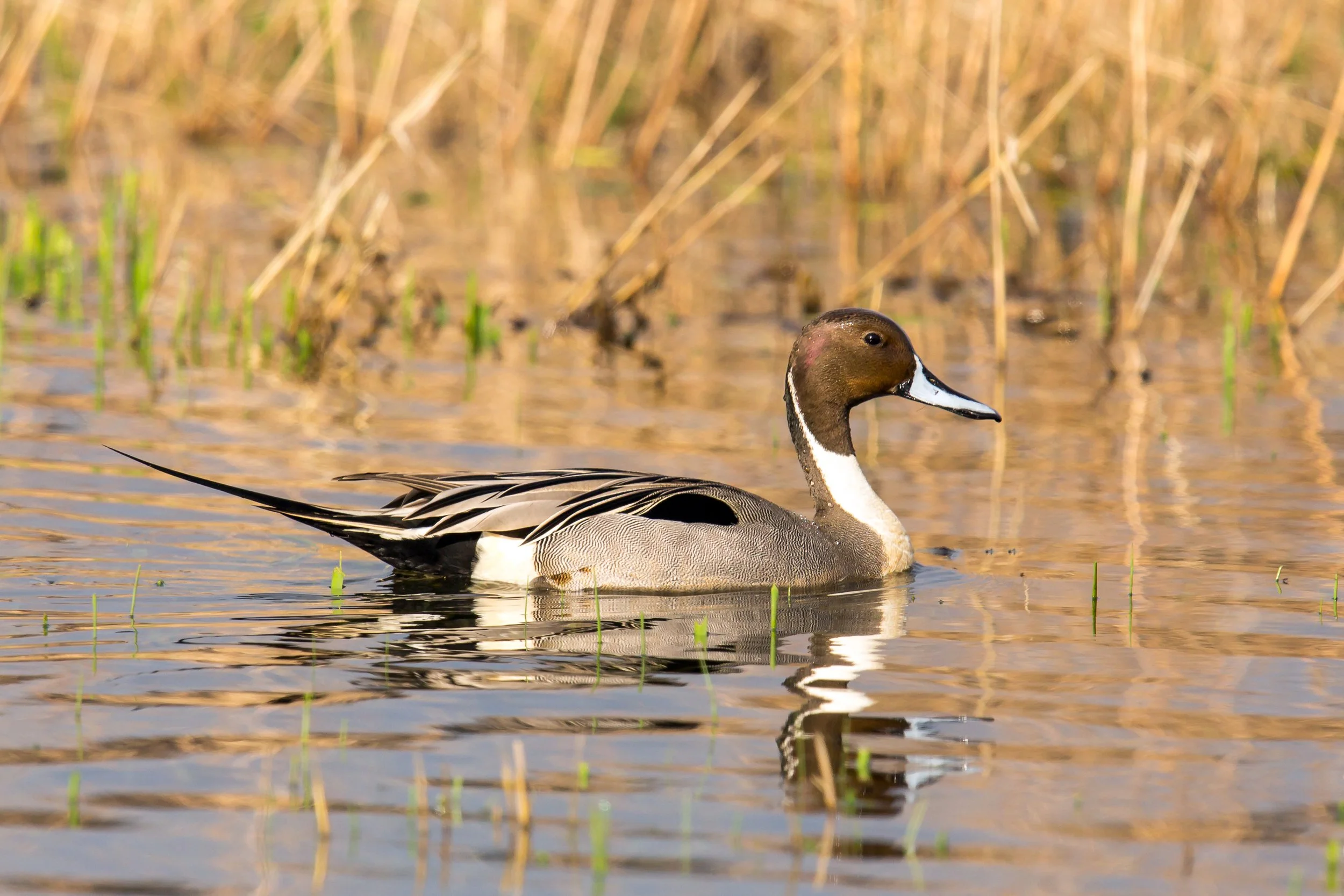
The flooding increased the size of ponds in side channels and some waterfowl, most notably Northern Pintail, Northern Shoveler, and American Wigeon were seen in larger flocks than usual. The flooding by taking up so much are from ground-feeding birds may have concentrated more such birds in smaller spaces leading to higher counts for Dark-eyed Junco, Golden-crowned Sparrow, and Song Sparrow.
For the second consecutive year the Count Day species total of 91 was lower than the 10-year average of 98 species for our count circle. A review of eBird postings from within the count circle found 4 additional count week species to bring the count total to 95 bird species for the week. Eastside Audubon had a nice group of 71 volunteers who recorded 19,029 individual birds which is over 100% of the 20-year average of 17,493. This is the highest count since the 2020-2021 count of 22,446.
Eastside Audubon recruited 71 volunteers to fill 14 teams. Of the 14 field teams, one had ten members and another had nine, and a third had eight members. Three teams had five members, four had four members, and three had three members.
For second consecutive year Eastside Audubon had a youth contingent of volunteers under age 18, accompanied by two parent/drivers. It is gratifying to have these young-birders return for the CBC, and we are encouraged to have them continue to add age diversity to our members.
Data Assessment Qualification
Variability in count numbers from year to year can be a challenge to interpret. Differences in weather conditions, changes in effort due to the number and skill level of volunteers on field teams, and changes in habitat due to natural causes (e.g., storms, floods, or fire) or human development may all contribute to changes in bird species count totals. The CBC uses the 10-year average as one yardstick to provide some context for a particular year’s count totals. The numbers in parentheses following the name of a bird in this report are the total number seen in this year’s CBC, and the percentage as a ratio of the species count to the species’ 10-year average (e.g., a percentage of 100% indicates a match of the 10-year average, 150% indicates a 50% increase over the current 10-year average, and 70% indicates 70% of the 10-year average.).
Highlights
The very large showing of Northern Pintails at over five times the 10-year average was likely due to the remaining flood waters in farms fields along the Snoqualmie River. The total of over 100 Killdeers was completely unexpected. The Northern Saw-whet Owl was a very nice find.
Trends
Ducks and Geese
Flooded fields and streams provided increased water habitat for some waterfowl and may have hindered those which forage on grass. Northern Pintails (726, 546%) took advantage of the floods and were seen at five times the 10-year average. Northern Shoveler (156, 422%) were four times higher and American Wigeon (443, 161%) were half again above their 10-year average, However, ducks that prefer quieter habitat had lower counts. Hooded Merganser (30, 48%) had half the typical total. Mallards (593, 64%), Wood Duck (6, 25%), and Ring-necked Ducks (58, 36%) were all below their 10-year average.
Continuing a declining trend, Cackling Geese (5507, 89%) were only somewhat below normal counts, but Canada Geese (521, 47%) were about half the usual number. With less grassy acreage available for browsing many geese may have sought less soggy pastures. Canvasback (0, 0%) always has low counts in our circle, but a brief rising trend over the past three years was short-lived and none were observed this year. Barrow’s Goldeneye was seen during Count Week.
Grebes, Pigeons, Hummingbirds, Coots, and Rails
Pied-billed Grebes (45, 63%) were a bit below the past few years total,, but Western Grebes (54, 138%) had higher numbers this year. Virginia Rails (8, 133%) may be finding winters more easily weathered and maintained their four-year trend of slightly increased numbers. Anna’s Hummingbirds (69, 80%) rebounded but did not reach their 10-year average. Mouning Doves (28, 122%) did well again for the third consecutive year. However, Eurasian Collared-Doves recovered (62, 166%), and Rock Pigeons (151, 111%) were present as usual. and we found one Band-tailed Pigeon.
Gulls, Cormorants, and Herons
Short-billed Gulls (787, 177%) rebounded all the way back to almost twice their 10-year average and Glaucous-winged Gulls (183, 156%) also did well. Ring-billed Gulls (22, 96%) were present in usual numbers. California Gulls (9, 160%) were around the lake on count day. The count of Double-crested Cormorants (71, 57%) was quite low. Great Blue Herons (34, 81%) remained constant at a low count.. One Green Heron was found along Issaquah Creek.
Shorebirds
Wilson’s Snipe (13, 144%) were trending back to their average, and Killdeer (101, 210%) were far higher than average. This year no Spotted Sandpipers was reported.
Raptors and Owls
Fifty-one Bald Eagles (51, 121%) were reported matching last year’s accumulation that was the most since 50 were seen in 2019 and 61 in 2016. Red-tailed Hawks (29, 78%) were below average, and Northern Harriers (5, 167%) maintained their slightly increased numbers despite the flooded fields. Five Cooper’s Hawks (5, 100%), one Sharp-shinned Hawk (3, 150%), were observed. American Kestrel (8, 114%) continued their steady showing above their 10-year average. A Northern Saw-whet Owl and one Barred Owl were reported on count day.
Woodpeckers, Kingfisher, and Shrike
In a complete reversal from the 2024-2025 CBC Northern Flicker (114, 121%), Downy (37, 132%), Hairy (18, 138%), and Pileated Woodpeckers (8, 114%) all exceeded their 10-year averages this year. Red-breasted Sapsuckers (9, 150%) also showed above their 10-year average matching the nine observed in 2018. Belted Kingfisher (9, 82%) were close to their average count.
Corvids
American Crows (2749, 210%) registered their highest count since 2001 when we began calculating 10-year averaged. Reports from the University of Washington Bothell campus have indicated that likely due to construction of a new building on campus may be the impetus for the large crow roost moving south from Bothel into Redmond. The roost is not within the EAS count circle, but observing the flight into and out of the new roost will more likely be seen. This may be one reason for the historical increase in the count of crows. Common Ravens (15, 79%) were back to a double-digit count this year. Steller’s Jays (89, 93%) rebounded to close to their 10-year average. Once again we had no one available to climb Tiger Mountain and thus, we were unable to document the presence of Canada Jays this year.
Chickadees, Nuthatches, and Creepers
Black-capped (307, 97%) and Chestnut-backed Chickadees (155, 102%), Bushtits (111, 90%) returned to their 10-year average numbers. Red-breasted Nuthatches (28, 78%) were slightly below average, and Brown Creepers (40, 154%) matched their last count of 40 reached in 2021.
Thrushes and Warblers
Varied Thrushes (14, 37%), a ground-feeding bird were well below their 10-year average, but paradoxically, American Robins (918, 162%) were well above their average numbers.
Three Hermit Thrushes were seen this year. After a dip in 2024 after a banner year in 2023 Yellow-rumped Warblers (15, 188%).were again above average. No Townsends Warbler was seen this year.
Finches
Given the unpredictability of counts for finches, we saw large swings from tallies of the last few years. After a large 2024 count of 699 Pine Siskins (2, 0%) only two were reported this year. Purple Finch (11, 46%) and American Goldfinch (9, 16%) paralleled their mutual increase in 2024 and their decline this year. Trends in House Finch (133, 102%) numbers are usually independent of changes in the counts of other finches. They are typically not given to irruptive behavior, and this year met their 10-year average count. No Red Crossbill, Redpoll, or Evening Grosbeak was reported.
Sparrows
The numbers for ground-feeding sparrows varied on this year’s count. With the exception of Dark-eyed Juncos (1047, 128%) and Golden-crowned Sparrows (129, 115%) which exceeded their average, sparrow numbers were down overall. Song Sparrows (114, 52%), Fox Sparrows (12, 29%), and White-crowned Sparrows (17, 60%) all reported lower counts. Spotted Towhees (100, 72%) regained some numbers but remained below their 10-year average, Lincoln Sparrow was not reported, but two White-throated Sparrow were seen on count day.
Blackbirds
Red-winged Blackbirds (327, 77%) dropped off a bit this year. Brewer’s Blackbird (20, 27%) seen only during count week during three of the past five years, were well below the 10-year average for the years when they are seen on the count day. After a two-year absence Western Meadowlarks (15, 115) were observed on count day. No Brown-headed Cowbirds were seen this year.
Count Week Birds
Four bird species were seen during count week which ran from December 17 to 23, 2025. Including these birds brought our count week total of species count to 95. A search for selected bird species on eBird checklists resulted in finding four species not seen on count day. They were observed by eBirders birding independently of the CBC. A Snow Goose was recorded in Fall City. A Barrow’s Goldeneye was observed on Sikes Lake. Great Horned Owls were seen in the Ames Lake area, and a Northern Shrike was observed in Marymoor Park.
I am grateful for all our volunteer team members and feeder watchers who completed the count of birds in our count circle. Thank you all for your dedication to the birds and for collecting important information which I have sent to National Audubon.
Andy McCormick, CBC Compiler
Eastside Audubon
Washington