
Bird of the Month: Ash-throated Flycatcher
By Andy McCormick

Andy McCormick, 2024 Audubon Washington Helen Engle Volunteer of the Year
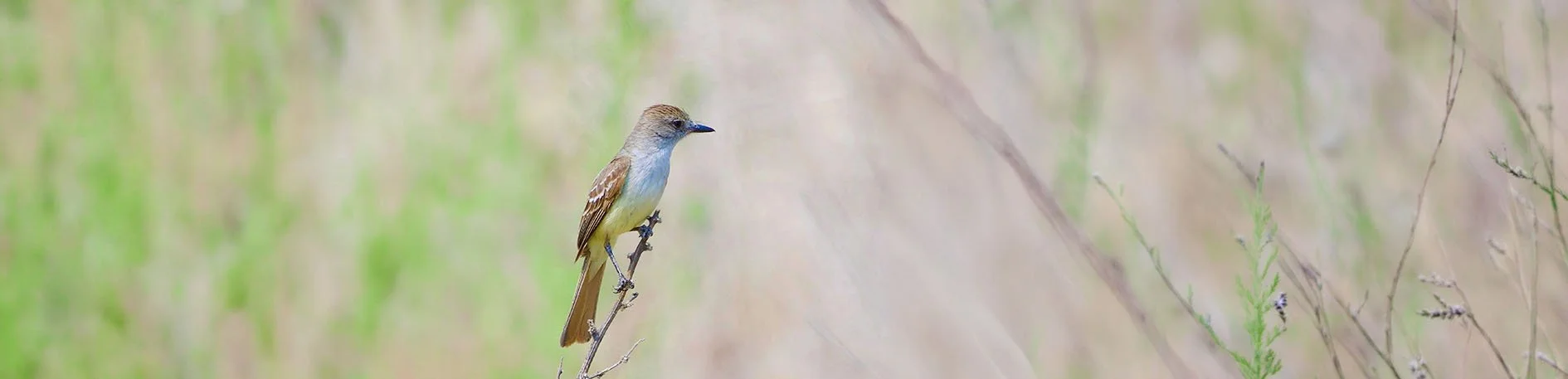
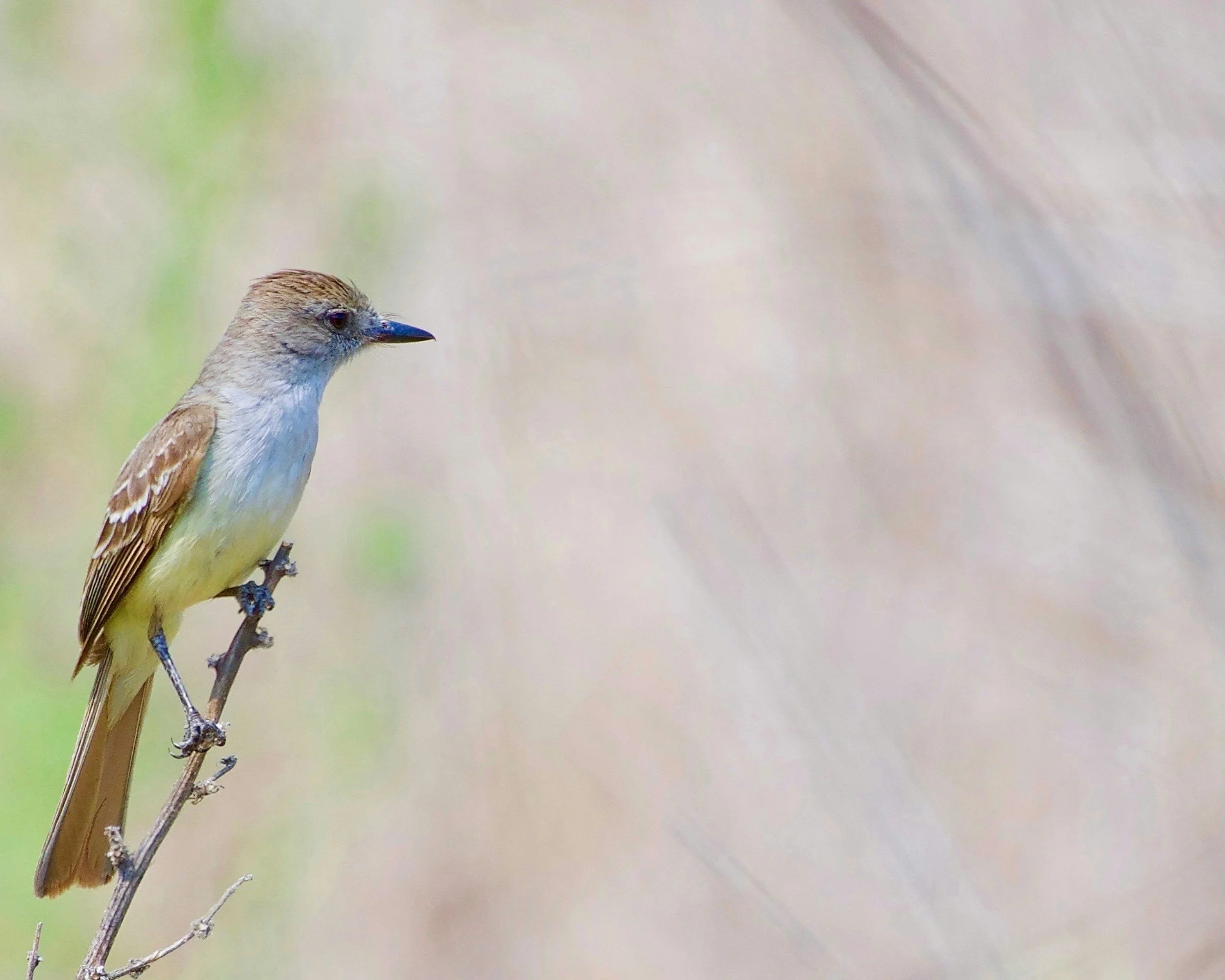
Crested, slender, and with an upright posture, the Ash-throated Flycatcher of south-central Washington is at the northernmost edge of its breeding range.
The Ash-throated Flycatcher is a unique bird in Washington. It is more typical of open country and dry shrub/steppe in the southwestern United States, and the northernmost extent of its range reaches the high desert in Oregon and the Columbia Plateau in south-central Washington. It prefers riparian habitats in overall dry country.
As an aid to identification, it is useful to compare the Ash-throated with another flycatcher the Western Kingbird (Tyrannus verticalis). The kingbird is slightly larger and shares some of the plumage color with the Ash-throated such as a gray chest and yellow belly. It is also a bird of open country habitat. In contrast, the Ash-throated has a crest and is slender in overall shape. Its throat and chest are whiter and its belly a paler yellow than the kingbird. Its back is brown rather than gray. The wings of the Ash-throated have wing bars and rufous edges to the primaries separating it from the overall dark wings of the kingbird. The tail of the Ash-throated is rufous with a dark tip on the underside. The Western Kingbird has an all-black tail. Photos, videos, and vocalizations of Ash-throated Flycatcher can be enjoyed at the Macaulay Library.
The Ash-throated is the only flycatcher of the genus Myiarchus in Washington. Myiarchus, means fly ruler, from the Greek muia, a fly, and archus, a leader or chief. The term refers to this bird’s ability to catch flies and other insects. The species epithet, cinerascens is from the Latin meaning ashen, or to become ashy, referring to its whitish-gray plumage, which is whitest at the throat and chest (Holloway).
SECONDARY CAVITY-NESTER
The Ash-throated Flycatcher is a secondary cavity-nester which means it is dependent on natural holes in trees or old woodpecker holes. For example, in much of its habitat it uses the nest holes of the Ladder-backed Woodpecker ( Dryobates scalaris). It is also an opportunistic nester and has been known to nest in mailboxes, holes in drainpipes, and bluebird nest boxes (Cardiff and Dittmann). The nesting woodlands of the Ash-throated Flycatchers vary with location. In California, they nest in oak-pine woodlands and juniper stands, but in Washington, they are more likely to nest in a riparian habitat among cottonwoods and willow trees. Stands of Oregon white oak, also known as Garry oak, have also been a favored habitat for these nest hole obligates.
The nest inside the cavity is constructed of grass and weeds by both parents and is lined with feathers or hair. Usually, 4-5 eggs are deposited and incubation only by the female lasts about two weeks. The young are fed insects while in the nest for another two weeks until they make their first flight. The adult pair often attempt two broods per year (Kaufman). The general diet of Ash-throated Flycatchers is comprised of caterpillars, beetles, wasps, and other flying or crawling insects. Ironically, these flycatchers seldom catch flies in midair. They typically forage from low branches by dropping to the ground or onto low foliage to glean insects.
STATUS AND CONSERVATION
The population of Ash-throated Flycatchers appears to be stable or increasing in some locations. Nest success may have been helped by “bluebird trails” of nest boxes which have been constructed in some areas of the west. Except for some Ash-throated Flycatchers which winter in southern California and Arizona, the large majority of the North American population retreats to similar shrubby habitat through Mexico and into Central America. In spring, Ash-throated Flycatchers arrive in their breeding range in
Ash-throated Flycatcher
Scientific name: Myiarchus cinerascens
Length: 8.5”
Wingspan: 12”
Weight: 0.95 oz (27 g)
AOU Alpha Code: ATFL
Washington by early to mid-May. Most depart on fall migration by mid-August with none remaining into September.
Despite the trend in stable or increasing population of Ash-throated Flycatchers, some observers express a long-term concern about the potential loss of Oregon white oak (Wahl et al). Strict fire management practices have reduced the number of fires in grasslands which has allowed encroachment by big leaf maple and Douglas fir trees into groves of oaks shading them out as the canopy closes above them (Cardiff and Dittmann). Additional loss of suitable habitat for Ash-throated Flycatchers has resulted from clearing for flood control projects and snag removal (Cardiff and Dittmann).
References are available upon request from amccormick@eastsideaudubon.org.
Visit the Eastside Audubon Bird Gallery to read Bird of the Month articles covering over 200 bird species.