
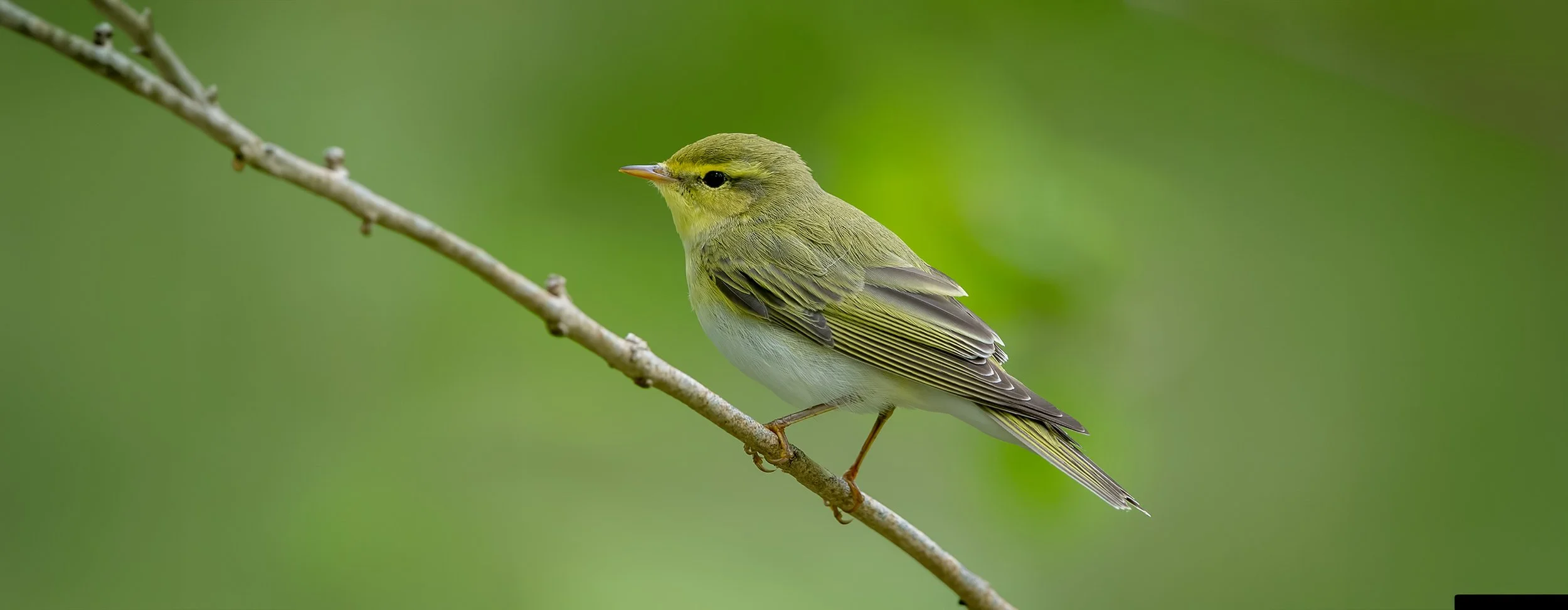
With spring upon us, the attention of birders turns to finding warblers. These are the birds that Roger Tory Peterson called “the butterflies of the bird world.” Over 50 species of warblers are making their migrations of thousands of miles from the tropics of Central and South America to North America. The largest and most varied warbler migrations occur in eastern North America but once they reach the boreal forest, millions of them continue to the western reaches of the forest. The Pacific Northwest region supports a group of twelve warbler species and in April and May they arrive in Washington. To reach the northwest these warblers followed a flyway along the Pacific coast and western slope of the Cascade Range.
Four of the warblers found in Washington are west coast specialties. Black-throated Gray, MacGillivray’s, Townsend’s, and Hermit Warblers are found only west of the Rocky Mountains. Knowing when and where to look for them is key to seeing these bird gems and learning more about the status and distribution of them helps us locate them.
The chart below shows when to expect each of these warbler species in our region. The arrival and departure dates provide an approximate period during the year for the best opportunities for spotting each bird. Some are more likely west of the Cascades and others east of the mountains, and a few occupy specific elevation ranges or habitat types.
Members of all twelve of these warbler species breed in Washington, but the majority of them will pass through the state and find suitable habitats in the boreal forest or coastal regions of Canada and Alaska. In spring these birds will be the most active. They will sing more as they look for a mate and stake out a territory.
Wood-Warblers of the Pacific Northwest
| Wood-Warbler | Breeding area | Arrival | Departure |
|---|---|---|---|
| Northern Waterthrush (Parkesia noveboracensis) | East of Cascades and Okanogan Valley in British Columbia and Washington | April-May 17 | August 23 |
| Orange-crowned Warbler (Leiothlypis celata) | Lutescens – Pacific slope Orestera – Interior mountains |
Mar-April April-May |
October August-October |
| Nashville Warbler (Leiothlypis ruficapilla) | Common low to mid-elevation breeder in eastern BC and WA | Mid-April-May | August-September |
| Black-throated Gray Warbler (Setophaga nigrescens) | Common west of Cascades and Coastal Range; Uncommon east of crest of Oregon | April 12-19 | September 27 |
| Townsend's Warbler (Setophaga townsendi) | Conifer-forest zones from BC south; Hybridizes with Hermit Warbler | Late April | Mid-late August |
| Hermit Warbler (Setophaga occidentalis) | Common in OR, uncommon in WA north to Olympic Mountains | WA 4/22-5/8 | Mid-June, 7/25 |
| Yellow-rumped Warbler (Setophaga coronata) | Auduboni – common Coronata, myrtle - Rockies |
Mid-April, May | Mid-September, October |
| Northern Yellow Warbler (Setophaga petechia) | Low to mid-elevation breeder in Pacific Northwest | Mid-April | July |
| American Redstart (Setophaga ruticilla) | Uncommon; low to mid-elevation breeder east of Cascades, local in Skeena, BC and Skagit, WA | Late May | September 6-13 |
| Wilson's Warbler (Cardellina pusilla) | Chryseola – westside breeder Pileolata – Interior BC |
April, peak May May-June |
September 13 Late August-September |
| MacGillivray's Warbler (Geothlypis tolmiei) | Common sea level to tree line | April 26, May | September 13 |
| Common Yellowthroat (Geothlypis trichas) | Common low to mid-elevation breeder | Late March-April 5, May | August-October 11, rare after Nov |
Data from Cornell Birds of the World and Aversa et al (2020) Birds of the Pacific Northwest: A photographic guide.