
By John Spilker
Eastside Audubon President
Somewhere this morning, a first-time birder opened the Merlin app, pointed a phone at a backyard tree, and learned the name of a song they'd heard their whole life. That moment is happening millions of times over. And it is why I am hopeful about Eastside Audubon.
I won't pretend the wider picture is easy. Nonprofits everywhere are under financial strain. Grants that renewed like clockwork are thinning. Donors are stretched. And it isn't only money — people of all ages volunteer less, and the hours that keep us running are harder to come by. The pandemic hurt us. Programs paused, gatherings stopped, and the revenue stopped alongside.
But something else happened in those locked-down years. People stuck at home looked out the window and started paying attention. The U.S. Fish and Wildlife Service now estimates that 37% of Americans 16 and older consider themselves birders — roughly 96 million people. The Cornell Lab's Merlin app added 7.5 million new users in 2024 alone. Plenty of seasoned birders aren't enamored with Merlin — it can't replace a good ear and years afield, and they're right. But it has put birding within reach of millions who never thought the hobby was for them.
Don't let anyone tell you that birding is a dying pastime. Just last week, the Charlotte Observer called it "America's quiet obsession." That followed a piece out of Bellingham about young people trading screens for binoculars. Both pieces tell the same story: the khaki-vested stereotype is gone, and the youngest birders — Millennials and Gen Z — are driving the growth, many drawn as much to the community as to the birds.
That matters. The same culture that has people volunteering less has left many of them lonely and looking for something real. Birding answers both. It gets you outside, puts you next to other curious people, and asks only that you show up and look. An organization like ours is exactly where that energy can land.
Things will change, and we should welcome it. Our younger members arrive caring less about life lists and more about conservation — protecting the land, water, and habitat birds depend on. That instinct is the future of this organization.
And through all of it, Eastside Audubon is holding its own. We've managed our resources carefully, kept core programs running, and stayed financially steady.
So yes, the environment is hard. But our work matters more than ever, our community is growing, and our footing is firm. I couldn't be more optimistic.
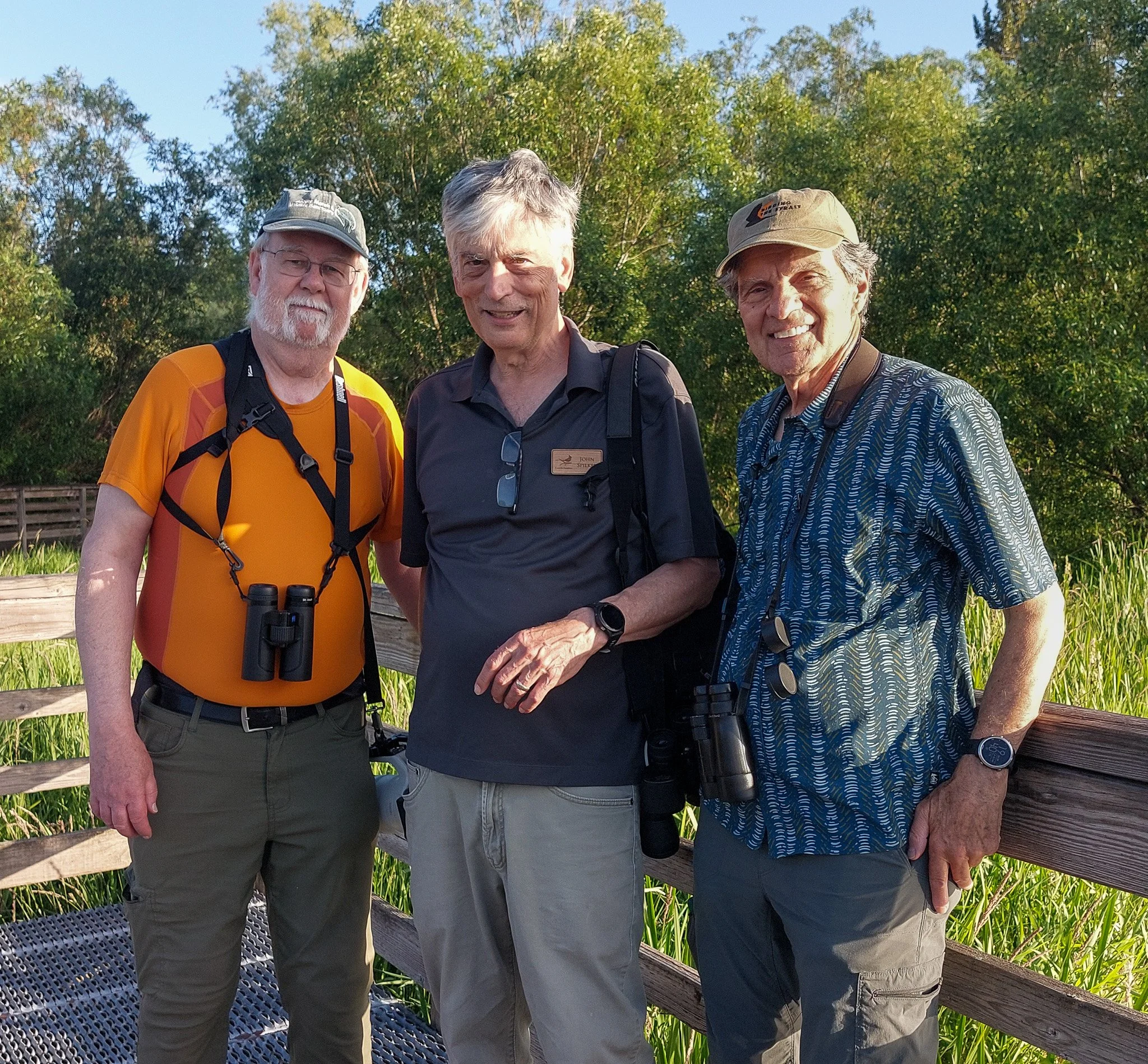
Chuck Guilford, John Spilker and Andy McCormick (from left) at a Juanita Bay bird walk.