In the interior of North America the Least Sandpiper is the most common of the “peeps,” the small sandpipers in the genus Calidris. However, on the coast Least Sandpipers often associate with Western and Semipalmated Sandpipers and can be lost in their great numbers. Least Sandpipers generally travel in smaller flocks.
Northern Pygmy-Owl
The Northern Pygmy-Owl (NOPO) is about 6.75” long with a wingspan of 12” and weight is 2.5 oz (70g). The genus name, Glaucidium (glaw-SID-ih-um), is shared with the Ferruginous Pygmy-Owl and is Latin from the Greek glaux, diminutive of glaukidion, meaning a kind of owl, so-called from its glaring eyes.
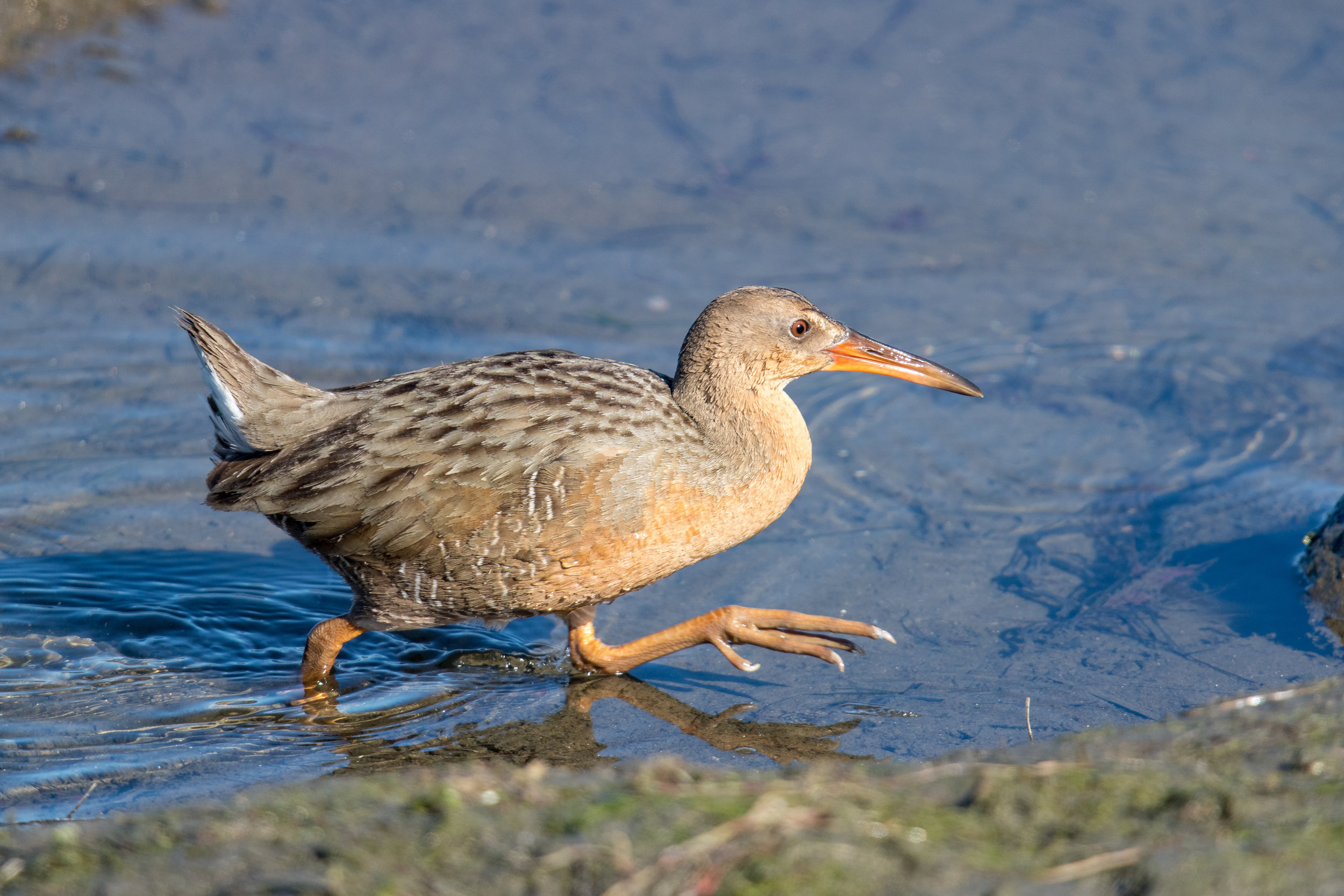
Virigina Rail
Northern Shoveler
Snow Goose
Snow Bunting
Pectoral Sandpiper
The Pectoral Sandpiper is uncommon in Western Washington but can usually be seen during fall migration. Adults begin passing through Washington in late July and juveniles show up from mid-August to late October. The juveniles will be in new plumage having completed their prejuvenile (or first prebasic) molt, which results in the change from downy feathers to their basic plumage.
Burrowing Owl
Wild Turkey
Canvasback
The Canvasback stands out from the crowd. Its stately presence separates it from other ducks. It has been called “the aristocrat of ducks” (Mobray), and “elegant” (Alderfer). Its large size, sloping forehead and characteristic “dark at both ends and white in the middle” appearance (Bell and Kennedy) make it easy to pick out of a group of other ducks.
Fox Sparrow
The genus name Passerella (pass-er-EL-ah) is from Latin, passer, meaning a sparrow. The species name iliaca (eye-lih-AY-cah) is Latin relating to the marked flanks. The common name is from the reddish or tawny “fox” color of feathers. The Fox Sparrow (FOSP) is about 7” long with a wingspan of 10.5” and a weight of 1.1 oz. (32g). It is one of our largest sparrows.
Western Tanager
Semipalmated Plover
Snowy Owl
Common Raven
American Coot
Pink-footed Shearwater
Cassin’s Auklet
Passenger Pigeon
At the time the Pilgrims landed in Plymouth, MA the Passenger Pigeon was probably the most abundant bird in North America (Kaufman). Enormous nomadic flocks of these pigeons numbering in the millions roamed around the eastern two-thirds of the continent eating beechnuts, acorns, grains, and berries.