The Palm Warbler is one of Washington’s “Winter Warblers.” In late fall and winter, with numbers varying considerably each year, Palm Warblers migrate south along the Pacific Coast through Washington, Oregon and California. In recent years Palm Warblers have been seen in Ocean Shores and on the Seattle campus of the University of Washington.
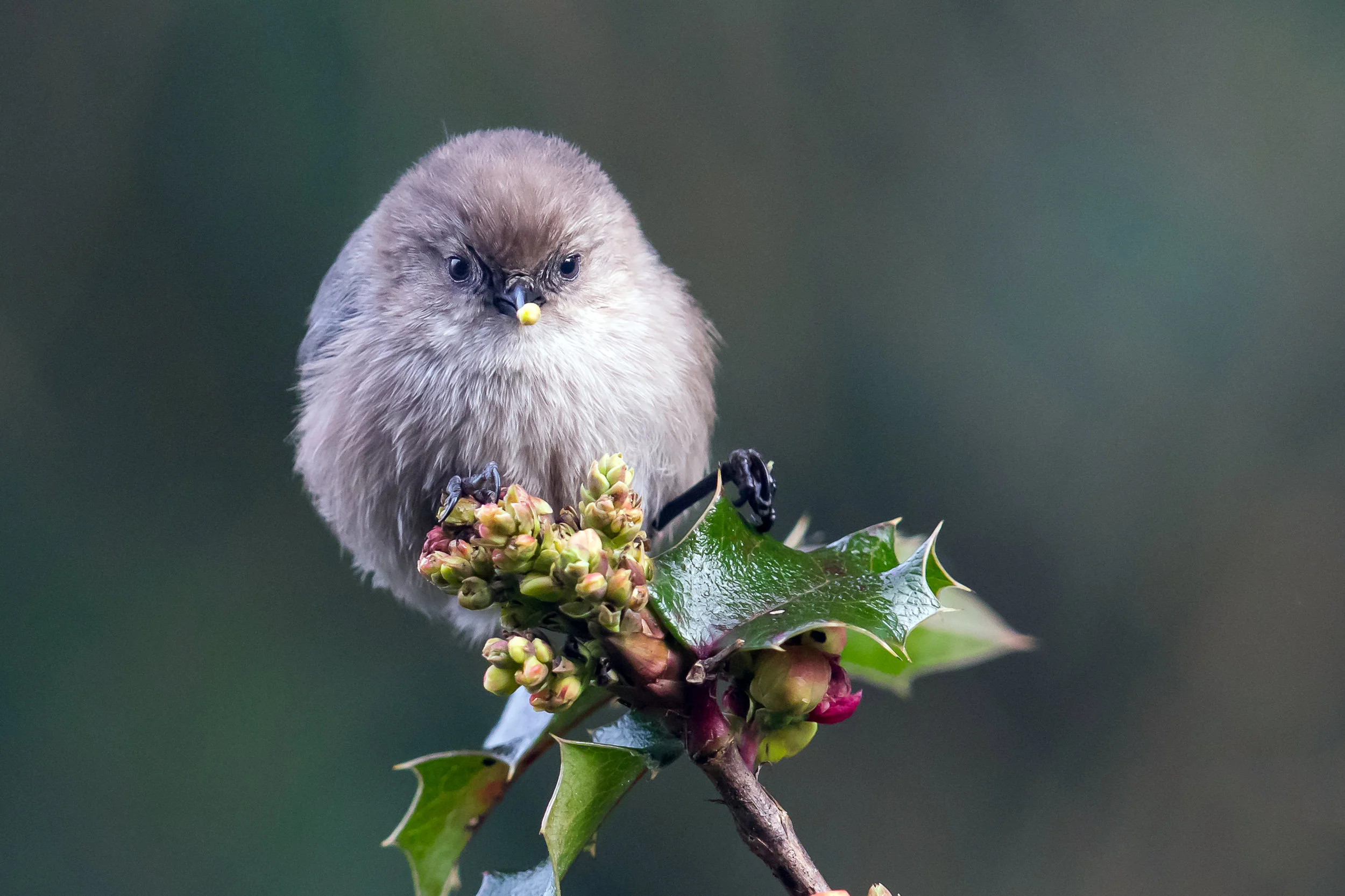
Bushtit
Savannah Sparrow
The Savannah Sparrow (SASP) is 5.5" long with a 6.75" wingspan. The genus name Passerculus is from the Latin meaning little sparrow. The species name sandwichensis is Latin, of place, Sandwich, Unalaska, or Aleutians area, from which came the first subspecies, Aleutian Savannah Sparrow, to be described.
Western Sandpiper
The Western Sandpiper is part of the genus Calidris from the Greek kalidris which was used by Aristotle for a speckled waterbird. Mauri is from Ernest Mauri (1791-1836) an Italian botanist and a friend of Charles Bonaparte (1803-1857), who named this bird for him. They co-authored a book on Italian fauna. The bird is the western counterpart to the Semipalmated Sandpiper Calidris pusilla and the common name designates this location.
Turkey Vulture
Black-crowned Night Heron
Caspian Tern
Bonaparte's Gull
Red-breasted Sapsucker
Black-throated Gray Warbler
Mountain Bluebird
The Mountain Bluebird, sometimes called the “prairie bluebird” (Dunne), is a bird of open grasslands. It is seen most frequently in Central and Eastern Washington. It enjoys a wide range of habitats including an altitudinal range from grasslands to open areas in forests, to alpine tundra (Alderfer).
Sage Thrasher
American Golden Plover and Pacific Golden Plover
Willet
Red-throated Loon
Steller's Jay
Yellow-rumped Warbler
Pine Siskin
The genus name Carduelis (Card-dyou-EE-liss) is from the Latin carduus, thistle (eats seeds of thistle). The species name pinus (PINE-us) is Latin for pine which is its common name apparently from the siskin of Europe, a yellow-green finch. Siskin apparently is derived from Danish sidsken or Swedish siska, a “chirper.”


