Common Murre

Common Murre

The Common Murre (COMU) is about 17” long with a wingspan of 26”. The genus name Uria (YOU-rih-ah) is from the Greek ourein, to dive. The species name aalge (AHL-geh) is the Scandinavian word for bird. The common name (MER) is of obscure European origin and may be related to marrot, local English dialect, for an auk, guillemot, or puffin.

Western Meadowlark

Western Meadowlark

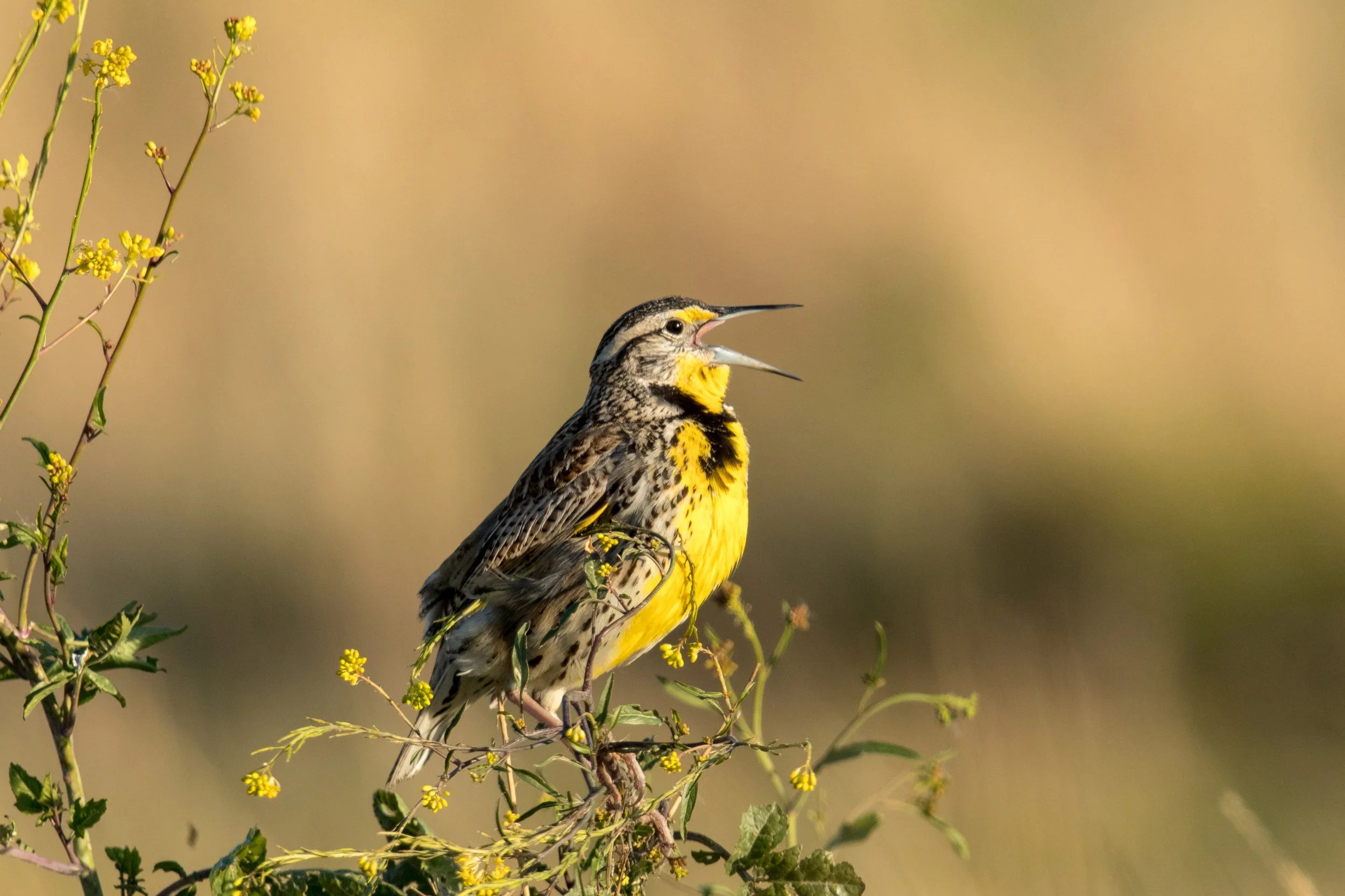
The Western Meadowlark (WEME) is 9-1/2" long. The WEME has a yellow breast and belly with a black V-shaped breast band. Upper parts are dark brown with dusky edges. When the bird is flushed it shows a conspicuous patch of white on each side of a short tail and flies with several rapid wingbeats alternating with short glides.

Nashville Warbler

Nashville Warbler

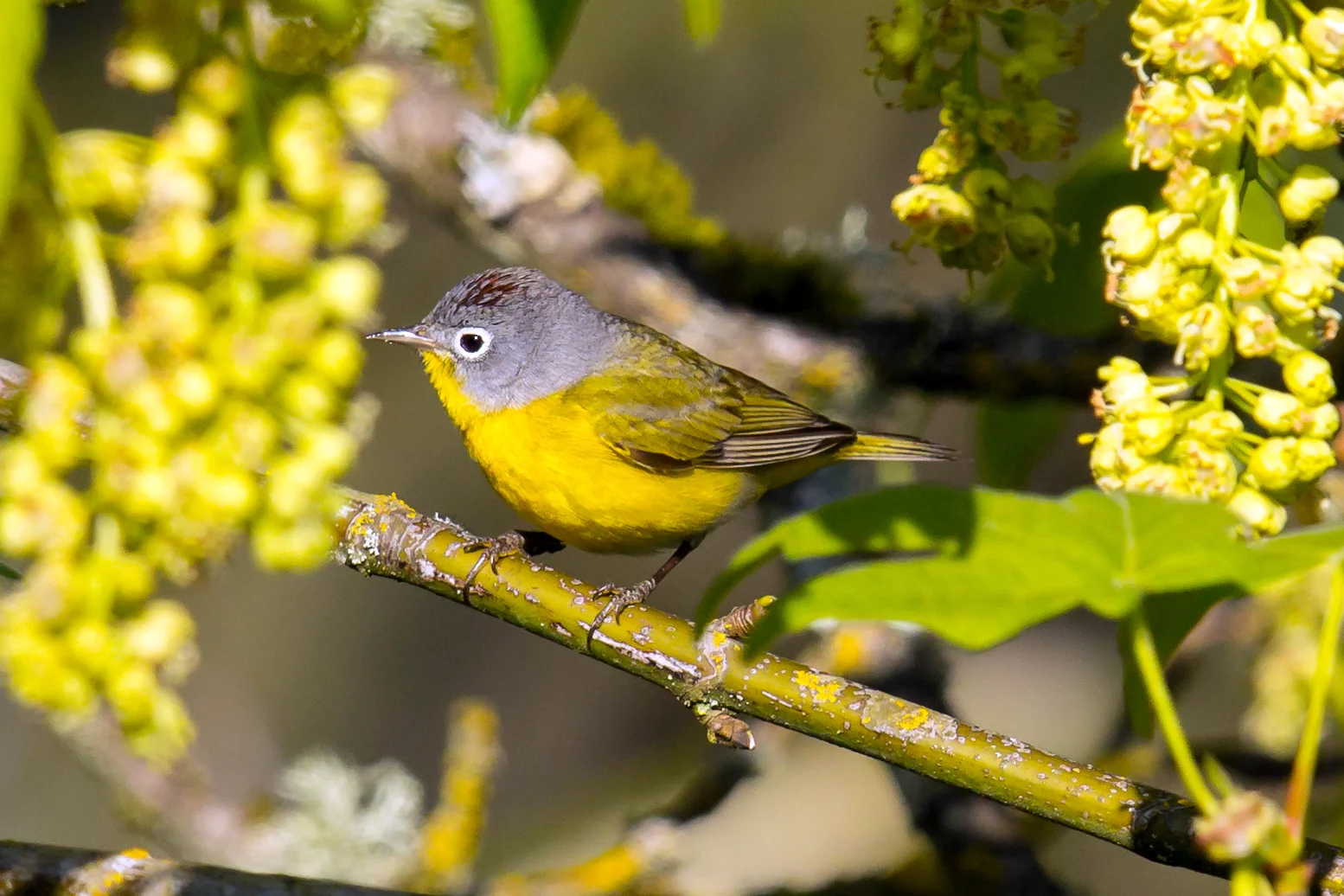
Originally found near Nashville, TN in 1811 by Alexander Wilson the Nashville Warbler is found in nearly every state, but does not breed anywhere near Nashville (Kaufman). It was once considered rare, probably because the eastern half of the U.S. was more heavily forested at the time.

Baird's Sandpiper

Baird's Sandpiper

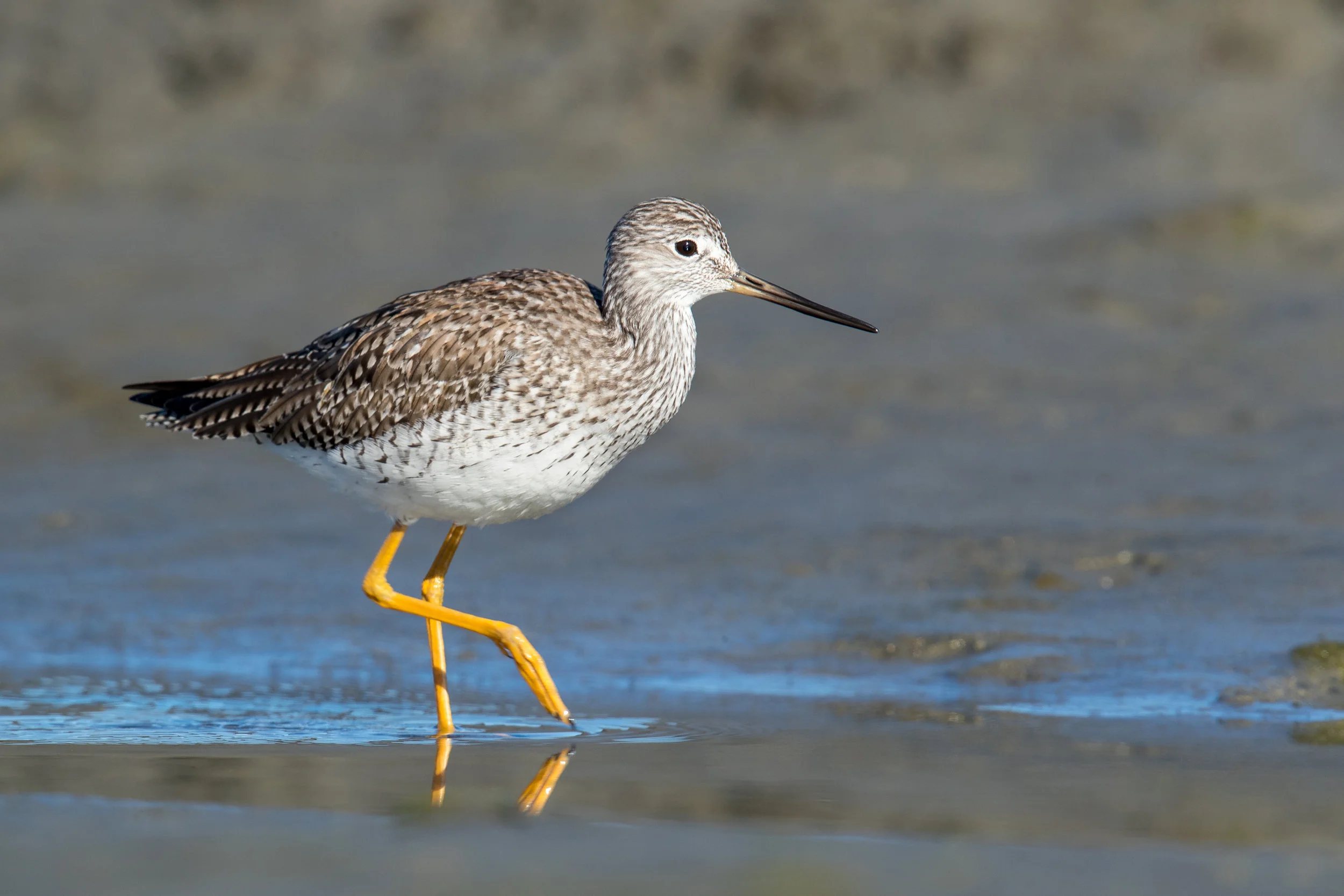
Baird’s Sandpiper is not seen very often in Washington and because of this it poses an identification challenge for many birders. However, its slightly larger size when compared to other peeps; its lack of red or rufous coloration; and its penchant for foraging higher on beaches and in drier areas, all help to separate this peep from the others. 

Pigeon Guillemot

Pigeon Guillemot

The Pigeon Guillemot (PIGU) is a member of the auk family and is about 13-1/2” long. It is generally found close to rocky shores along the Pacific Coast from Alaska to California. The genus name Cepphus is from the Greek kepphus meaning sea bird; the species name columba is from the Latin for dove or pigeon.