
How land is developed shapes which birds stay and which ones go. That is the finding of a new University of Washington study, published in Scientific Reports.
University of Washington researchers Jack DeLap, John Marzluff and Sarah Converse spent 12 years following birds as forested land in the central Puget Sound region was transformed into new subdivisions. Adaptable birds such as robins and sparrows showed mixed responses, with some persisting as development progressed. Crows, pigeons and hummingbirds were generally able to live in both kinds of development. But forest-dependent birds such as Wilson's Warblers, Pacific Wrens and Swainson's Thrushes fared much better where development was less dense and more of the original forest was left standing.
The researchers found that lower-density conservation developments retained about 30 percent more forest than higher-density planned communities and supported greater bird diversity, particularly among species most sensitive to human development.
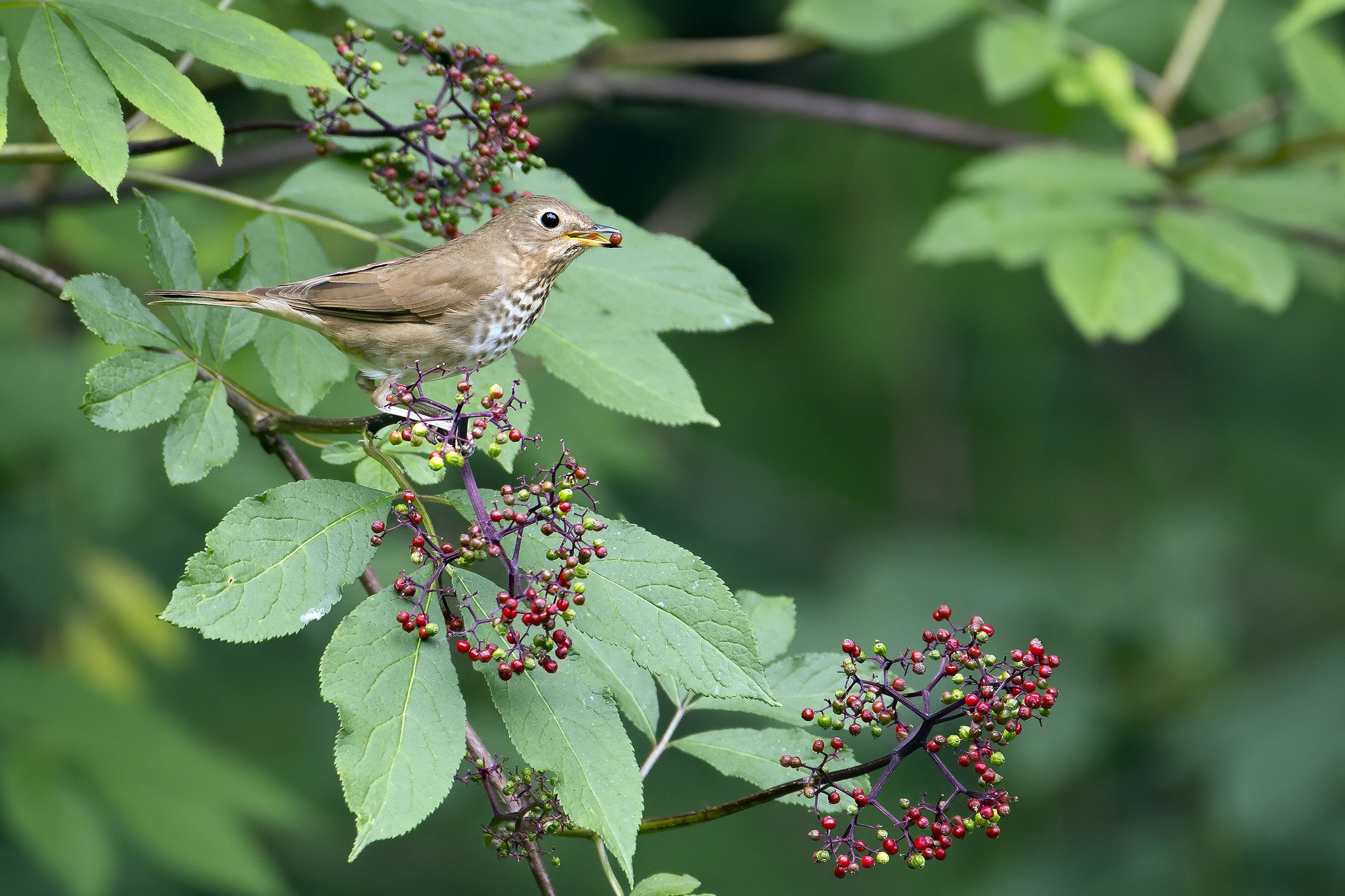
Swainson’s Thrush by Mick Thompson
"Birds care how land is developed," said Marzluff, a UW professor emeritus and the study's senior author, "which gives developers a choice during the planning process." DeLap, the lead author, is now at Seattle University.
For Eastside members, the findings land close to home. The choices the study describes are being made in our communities right now — and among the birds affected by them is the Swainson's Thrush, Audubon Washington's 2026 Bird of the Year.