
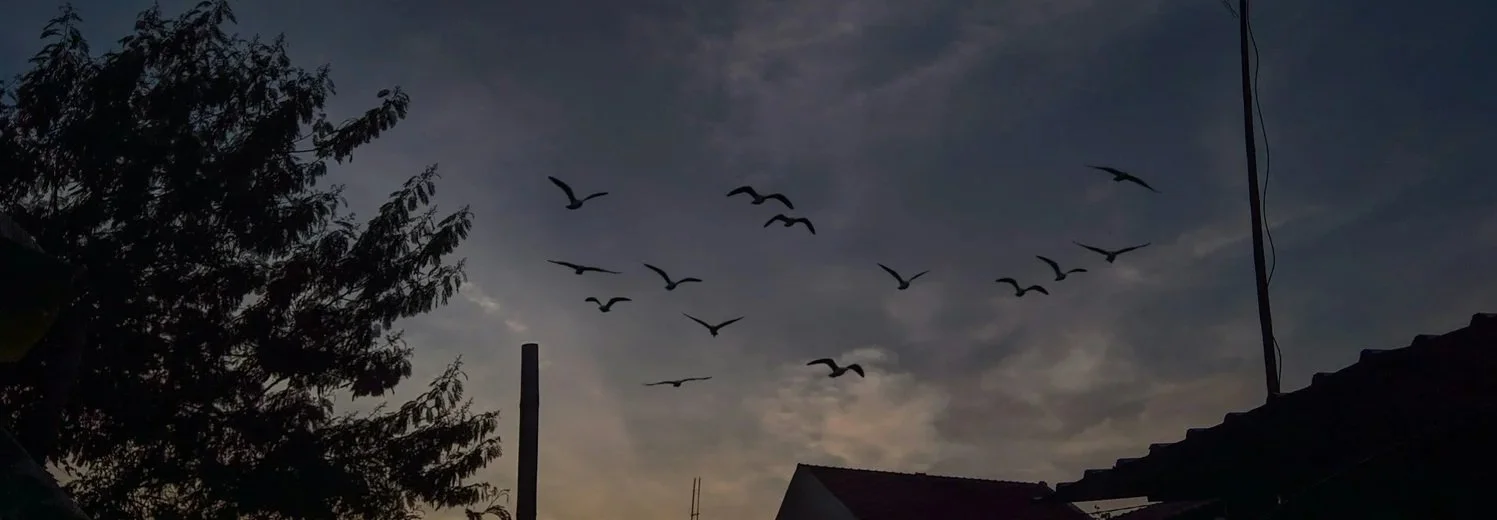
Nearly 1.9 million birds flew over King County one night earlier this month, according to radar estimates from BirdCast, a project led by the Cornell Lab of Ornithology, in a wave of migrants that built through the evening and did not let up until dawn.
The count, 1,890,900 birds on the night of September 5, came from BirdCast, which reads the nation's weather radar for the signatures of birds in flight. At the peak, 2:30 a.m. on September 6, about 558,700 were in the air at once, moving south-southeast at 25 miles an hour and roughly 1,600 feet above the ground. A week earlier the nightly total had been about 460,000. On the night of September 1 it was about 1,700.
The migration will still be under way on September 23, when Judy Bowes comes to the Redmond Library to talk about what happens when those birds meet a city. Collisions with buildings kill more than a billion birds a year in the United States and rank among the leading causes of bird decline in North America, according to Ms. Bowes, a University of Washington researcher who wrote the university's bird-friendly design standards.
Register for Program Night
Few people saw any of it. Most songbirds migrate in the dark, navigating by the stars and the glow of the horizon. On September nights the traffic over the Eastside includes Black-headed Grosbeaks, Caspian Terns and Swainson's Thrushes, according to BirdCast.
Many birds spend the day resting and lift off again after sunset, only to meet lit windows, rooftops and buildings.
The most effective remedy costs nothing. Audubon Washington asks residents and building managers to switch off or dim non-essential outdoor and upper-floor lighting from 11 p.m. to 6 a.m. during fall migration, which continues through October 31. To see what passed over your own roof last night, visit the King County migration dashboard. The page updates each morning. Press Previous to step back a night at a time. The big one is still there.